|
The minister for reducing poverty |
Related newsConstance to be new health secretary Long COVID putting Scots at risk of poverty All public bodies must focus on health, urges charity Holyrood hears calls for more inclusive communication Scotland’s chance to lead on disability benefit system New social care minister appointed 
|
|
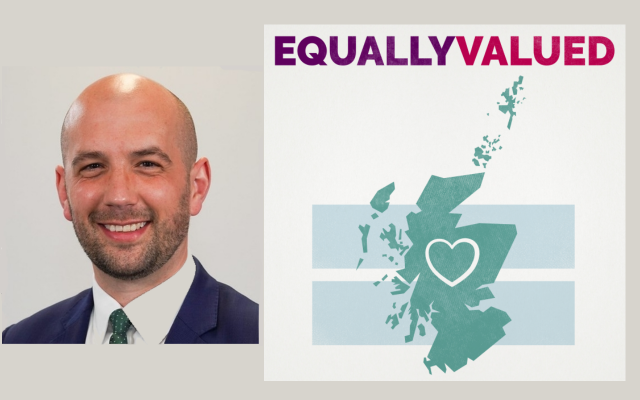
Ben Macpherson MSP, Minsiter for Social Security and Local Government
|
||
|
||
|
Since 2013, Scotland has been seeking to do social security differently. Now, in a cost of living crisis, with many people struggling to stay afloat, the ill effects of poverty on health and wellbeing are at the forefront of policymakers’ minds.
Ben Macpherson MSP, Minister for Social Security and Local Government, spoke to healthandcare.scot for the second episode of Equally Valued, our podcast coproduced with the ALLIANCE, about Scottish government efforts to forge a social security system centred around dignity, fairness and respect.
Poverty has long been considered a fundamental driver of poor health outcomes, with the predecessor of the Scottish parliament’s Health and Social Care Committee concluding socio-economic deprivation has ‘multiple and multi-faceted effected on the health of individuals and family’ back in 2015.
Ben Macpherson told healthandcare.scot that social security has an important role to play in poverty reduction, but work must also be done across government to enable people to live healthy and happy lives:
“Social security, of course, can have an impact [on poverty and health]. It's not the only thing we need to do to resolve these issues: there's action in the health service and in the housing tenure and other support services that we of course need to undertake change and improvement on as well.
“But social security alongside household costs and income from work and earnings is one of the three key drivers of poverty reduction. So we want to increase income, we want to reduce household costs, and social security can be a part of that.”
In the wake of the financial crash, welfare reforms introduced by the UK government in 2010 in order to reduce public spending has seen the main working-age benefits capped and subject to freezes and growing numbers of conditions attached.
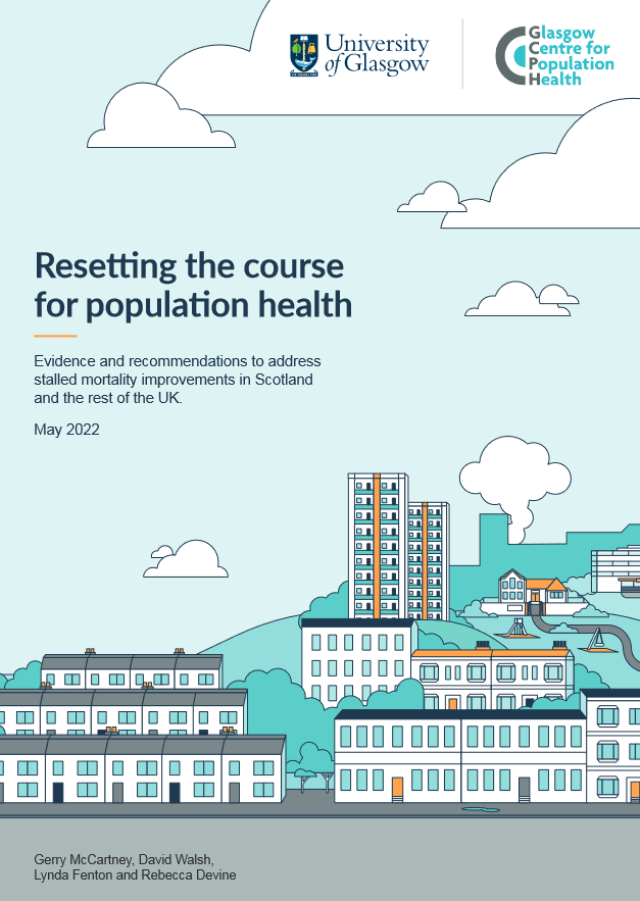
Recent research by the Glasgow Centre for Population Health (GCPH) suggests this programme of austerity is likely the most substantial contributor to stalled mortality trends seen across Scotland and the UK, and has resulted in worsening health outcomes for many, especially in mental health.
To reverse the impacts of actions taken by the UK government, the researchers have called for the Scottish government to ‘top up’ reserved (UK-led) benefits as well as create new benefits and increase existing benefits to support low-income households.
Social Security Scotland – which, according to its charter, has dignity, fairness and respect at its heart - is now responsible for 12 benefits in various stages of implementation. Prior to April 2013 the benefits system was fully reserved to Westminster.
Mr Macpherson says Scotland’s approach to social security is far from that taken of the UK government’s Department of Work and Pensions:
“We don't have any sanctions in our social security system in Scotland. The sanctions regime is a UK government policy that wrongly targets some of the most vulnerable in society and pushes them further into poverty and insecure employment.”
“In particular, the recent UK government decision to shorten the length of time given to claimants of Universal Credit to find employment, from three months to four weeks is a regressive move by the UK government in our view.
“We have repeatedly called on the UK government to urgently review this policy, and the various other failings of the Universal Credit system, such as the five week wait, which we also think is wrong, the two child limit which we think is wrong, and the benefit cap, which we think is wrong, although we have committed to mitigate against the benefit cap in our recent tackling Child Poverty Action Plan.”
To try to ease the impact of growing costs of living, the Scottish government in April raised eight Scottish social security benefits by 6%, to reflect a higher than expected inflation rate. The UK government did not follow suit, and recipients of reserved benefits will see a 3.1% rise this year.
Scottish Child Payment - a flagship benefit unique to Scotland offered to low-income families with children under six – was also recently increased to £20 a week per child, which will be extended to £25 and to all those under 16 by the end of the year.
However, the GCPH says this must be increased to £40 per week in order to meet child poverty reduction targets.
The roll-out of new devolved social security has been found by Audit Scotland to be going well. People are ‘overall positive’ about their experience with the new system and new and complex social security benefits have been successfully launched despite the challenges of the pandemic.
However, they also found substantial risks remain in timescales and staffing, as Social Security Scotland shifts from directly administering just under 19% of devolved benefits to more than 70% which it is due to take over from the UK government. The public sector watchdog says the body will need to double its workforce within the next year, as well as plan how it will pay for greater social security spending alongside other policy initiatives.
Audit Scotland has said the Scottish government ‘is clearly committed to establishing a social security system that operates on the basis of dignity, fairness and respect’, and is measuring user feedback. However, the public watchdog says it must also evaluate value for money and demonstrate how the extra funding has impacted health and wellbeing outcomes.
Another recommendation from the GCPH report is for local areas to provide high-quality money advice and welfare rights services to ensure people receive all the benefits and other entitlements for which they are eligible.
Mr Macpherson says a key part of the new system is its focus on reducing barriers to benefits take-up and its local delivery model:
“We want people to reach out for support. Social Security Scotland has two main centres in Dundee and Glasgow and - this is important - teams in every locality area. So every local authority, all 32, and these are known as our Social Security Scotland Local Delivery Team.
“These local delivery teams offer in-person support across the country. Advisors can answer questions about benefits and help with filling out applications. This advice is available in person or on the phone or by video call, whatever the people feel is the best for them. And that's to reduce barriers to accessing social security.
“And Social Security Scotland is also committed to inclusive communication, which means that services are designed so that as many people as possible understand what we do, and can get in touch with us in the way that they want to, so that we are bringing a service that that responds to what people want.
“Social Security Scotland is committed to treating people with dignity, fairness, and respect. Those are our values that we abide by and are enshrined in law. And we are here to listen and support people, guiding them through their application so that they can get the support that they're entitled to.”
You can listen to all episodes of Equally Valued here.
Read more: Austerity blamed for Scotland’s health inequalities; Minister: Carers benefit launch “top priority”; Update: New portfolio to tackle inequality Tags: Scottish Government; Social security. |