|
NCS must not fail minority communities |
Related newsA timeline of Scotland’s National Care Service Politicians told: “Carers cannot wait” National Care Service Forum 2025 Care Reform Bill: a step, not a leap Holyrood passes Care Reform Bill Lived experience at centre of care advisory group 
|
|
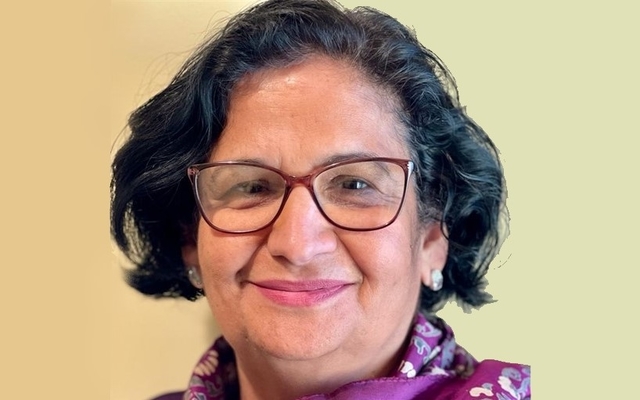
Rohini Sharm Joshi OBE
|
||
|
||
|
The proposals for a National Care Service risk failing the most vulnerable Scots who are from ethnic minority communities, according to equalities specialist Rohini Sharm Joshi OBE. In this opinion piece for the ALLIANCE’s Future of Social Care series, she calls for urgent action to begin now to improve care and support for ethnic minority older people within the proposed NCS.
"The launch of the new National Care Service provides an important opportunity to address the care needs of Scotland’s ethnic minority older people. However, there is a danger that, like health and care services before it, the new organisation is falling into the same trap of too much talk and not enough action.
For Scotland’s ethnic minority older people, social care services have long been confusing, challenging and sometimes even downright inaccessible. Their specific care needs remain not fully understood, which often results in them being overlooked. And this is a particularly sad state of affairs, as this first generation of ethnic minority older people have worked hard all their lives. They have raised their children without support, equipping them to live a better life and often depriving themselves of respite and relaxation in order to give their families the very best.
These were typically self-reliant entrepreneurs, working very long hours, seven days a week. They didn’t think to ask for support, and indeed few would have known that support may have been available. And now, in their older age, when they have very real and pressing care needs, they can’t, as tradition would have had it in the past, turn to their children. Their second generation grown up children are busy working and raising their own families.
We have in Scotland a generation of ethnic minority older people that are disenfranchised from the care they deserve and are entitled to because of challenging language and cultural barriers.
There was hope, with the overwhelming evidence of the disproportionate impact of Covid on ethnic minority people, that any new approaches and services would be sensitive and go the extra mile to deliver on the recommendations made by various advisory groups set up to deliver equality.
The new National Care Service promises to be “more integrated” and “transparent”, phrases which have been wheeled out to introduce new services for decades. But they remain empty words without considering new approaches, and more importantly, new actions to meet these needs.
For example, the new National Care Service again promises to support unpaid carers. However, it is evident that ethnic minority carers do not understand the term. They continue to struggle with the demands made on them as carers because they don’t think they have a choice. Many of these carers are physically and mentally exhausted. They desperately need access to information on how they can be helped and access to a service which understands and meets their cultural needs.
The recent Race Equality Framework in Scotland 2030 acknowledges that the health and care services were found to be less effective for people of specific ethnicities and highlighted a need to ensure social care services were provided appropriately, especially for older people in minority ethnic communities. It recognised the importance of being listened to and treated equally and fairly with respect for dignity and human rights as part of a person-centred approach. To support this goal, several programmes of work are being undertaken in Scotland to improve the currently patchy evidence base on ethnic health and care inequalities.
Stakeholders who took part in the development process for the Framework felt that the Scottish health care system needs to build more specialism around these issues and that health services in general need to be more responsive to the circumstances and needs of minority ethnic people. Taking account of the particular needs of different service-users in regard to their particular characteristics and circumstances was identified by the Scottish Government as part of the key principles underpinning health and social care integration in Scotland.
Another research initiative by Scottish Care, the Scottish Care Cameo series of articles, included a piece of research entitled Keeping Body and Soul Together: reviewing the physical, emotional and spiritual needs of ethnic minority older people in Scotland. This paper highlighted the care needs of this group of older people and stressed the importance of devising practical solutions to the barriers to services, rather than producing strategies and policies which have no meaning and don’t deliver effectively for ethnic minority communities in Scotland.
It is therefore disheartening that the National Care Service’s commitment to equality is that “it will consider the impact on equality groups”. The Race Equality Framework project and Scottish Care has already quite clearly done the research, talked to stakeholders and made recommendations.
If the new care service is still to “consider” then the question has to be asked “is there a commitment to deliver?”
My concern is that the National Care Service is signalling a reluctance to deal with inequalities head on. Its commitment is lacking robustness and its actions lack a determination to forge forwards. Instead its emphasis seems to be more on learning and understanding, which whilst it buys time for service providers, it means nothing if it doesn’t deliver changes for those who need it most.
If the already overwhelming evidence from years of research and consultation is not to be considered, those affected, many of whom are weary of giving their opinions to researchers, may not only lose the will to participate, but will find that any changes will be too slow and too late!
It is vital that research is updated with changing needs but it is unacceptable when service delivery is not changing and improving in parallel.
It is crucial for Scotland’s ethnic minority older people that there is a real will for tangible change, that actions and measures are taken that will make a real change to people’s lives.
The time for talking, researching and listening with no real action is over. It’s time to stop kicking the can down the road, perhaps because of a fear of getting it wrong. It’s time for Scotland’s ethnic minority older people to enjoy the support to which they are entitled in their old age. They have earned it.
Rohini Sharm Joshi set up her own consultancy, RSJ Equality, to continue over 30 years’ work in housing, including leading an award-winning Equality Programme for housing associations. She has a particular focus on working with older people on equality of care and services.
See the full series of opinion articles published as part of the ALLIANCE’s Future of Social Care series.
Read more: Ministers promise new carers strategy ; Pandemic an “opportunity” to rethink end-of-life care; Report warns against silo approach to vaccination;
Sign up to our bulletin for key health & social care updates straight to your inbox. |
