|
Insight: Social care seen as “lapdog” of NHS |
Related newsNew discharge to care homes programme COVID findings must be ‘mandate for lasting change’ Briefing: Changes to sponsoring staff from abroad Collective bargaining promised for social care Care pay reform must come with stability not strain 
|
|
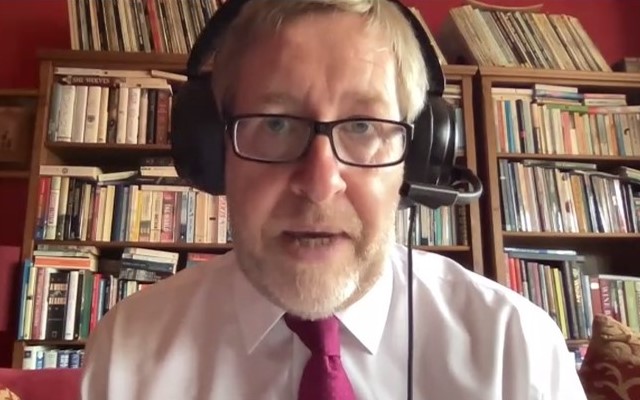
Dr Donald Macaskill
|
||
|
||
|
Though promised more money in next year’s budget, the situation in social care now is critical.
Staff are leaving, attracting replacements is proving near impossible and the as-yet unknown risk of Omicron threatens any optimism that better days are coming.
While two pay rises for care workers in short succession have grabbed headlines, the head of Scottish Care, Dr Donald Macaskill, says the sustainability of the sector will depend on a lot more than just wages.
Earlier this year an internal review looking at the early days of the covid-19 response found senior government officials had little expertise on social care, which left them ill-prepared to handle the effects of the pandemic.
Nearly two years on, Dr Macaskill says little has changed.
“To some extent, we could almost say that we're further back,” he told healthandcare.scot. “Because social care now is so equated to being the lapdog of the NHS, and to be an add-on to acute and secondary care services – even primary care – that the distinctiveness, the uniqueness of social care is largely lost to the general public, but also sadly to many strategists and decision makers.
“Social care is unique and distinct. But it is only seen through the lens of the NHS, and that's hugely damaging.”
In the latest example of policymakers’ focus on the NHS at the expense of social care, Scottish government officials admitted massive recruitment drives by the NHS – where staff enjoy better terms and conditions – could ‘inadvertently’ take staff from social care.
Meanwhile, the NHS recovery plan published in the summer, backed by more than £1bn of support measures, has not been accompanied with an equivalent blueprint for social care.
Dr Macaskill says this continued failure to place social care on equal footing is evidence of “political immaturity, which fails to see a whole system”.
“I've got more concern now about social care than I have had at any point during the pandemic.
“And part of that is because we are failing to make decisions, which are about the whole system of care and support and we're solely focused on the maintenance of the NHS, which was the problem at the start of the pandemic.
“There's no point in massaging one part of the system in the hope that the whole rest of the system will keep following.”
Recruitment has been an ongoing issue within the sector, exacerbated by relatively low wages and inadequate terms and conditions. A focal point of next year’s budget is a commitment to increase care staff wages to £10.50 an hour, with the hope this will attract new people to the sector.
But the Scottish Care boss says issues with recruitment run much deeper:
“It may sound good to see we're increasing baseline pay in the care sector, but without attending to all the other fires which are burning and raging in some parts, then the whole system and the whole process will just burn out anyway.
“We remain extremely concerned that headline grabbing figures fail to understand the dramatic instability of the social care sector in Scotland.”
One such “fire” is retention, with a recent workforce survey showing absence levels are as high as 16% - around four times that experienced within the NHS – with burnout, stress and exhaustion given as the main reasons for absences. Elsewhere, some providers said unfair criticism levied in NHS oversight visits made staff ‘struggle to feel valued’.
Dr Macaskill told healthandcare.scot: “We have never before experienced in social care the level of absence that we're currently experiencing – forget about recruitment, it’s about retaining workers.
“And the number one reason that people are off work isn't because of terms and conditions and pay - those are absolutely critical and I'm not diminishing those – but it is because of mental health, exhaustion, grief, stress, and traumatic stress.
“Part of what we need from our leaders is a real and not a rhetorical understanding for the trauma that frontline staff are still experiencing.”
Ministers have earmarked £165m to develop plans for a National Care Service, which is set to be up-and-running by 2026 – too far off for many, says Dr Macaskill.
“To be honest, providers of social care aren’t thinking about the national care service, because that's tomorrow. There's a nightmare happening at the moment. And that's the reality of delivering care in a fiscally exhausted and depleted environment.”
“People are really worried about whether or not they can go back into their psyche and their bodies and find the strength in order to get through the next few weeks. They have physically, emotionally and psychologically spent themselves…it’s very difficult to see what can happen in order to make life any easier.”
As cases of covid-19 reach an all-time high with the onset of the Omicron variant, and the risk to care home residents is still unknown, care workers are facing another Christmas at the frontline of another wave.
Any positive optimism that normality would resume has been “devastated and shattered”. “People are really worried about whether or not they can go back into their psyche and their bodies and find the strength in order to get through the next few weeks.
“They have physically, emotionally and psychologically spent themselves…it’s very difficult to see what can happen in order to make life any easier.”
Booster vaccinations offer the best protection from the new variant, and work is ongoing to encourage frontline staff to see a third dose as crucial as the first two.
And on this note, Dr Macaskill says we finally have something to feel optimistic about:
“The positive in the midst of all this is the dramatic change that vaccination has meant to both staff and their safety but also to families and care homes…without vaccination, I don't know where we would be.
“[This] is something we should be celebrating this Christmas.”
Read more: Care payrise: ‘Devil will be in the detail’; Care workers swayed by NHS recruitment campaign; Insight: The discovery of hindsight in social care
Sign up to our bulletin for key health & social care updates straight to your inbox.
Tags: Covid-19; Social Care; Staffing & Workforce. |
