|
Concerns over home deaths data gap |
Related newsMusic, dance, rugby and dementia Four hundred die waiting for care packages Guardianship orders hit record high Frailty services supported with £85m Dementia rise estimate should be “wake up call” Edinburgh welcomes outdoor brain health centre 
|
|
© Photographee.eu
|
||
|
||
|
Experts have raised concerns about a sustained higher level of deaths taking place at home, warning a lack of data means the quality of end-of-life care is difficult to establish.
The first and last time Audit Scotland looked into palliative and end of life care was back in 2008 – 13 years ago, when most deaths took place in hospitals and less than a fifth at home.
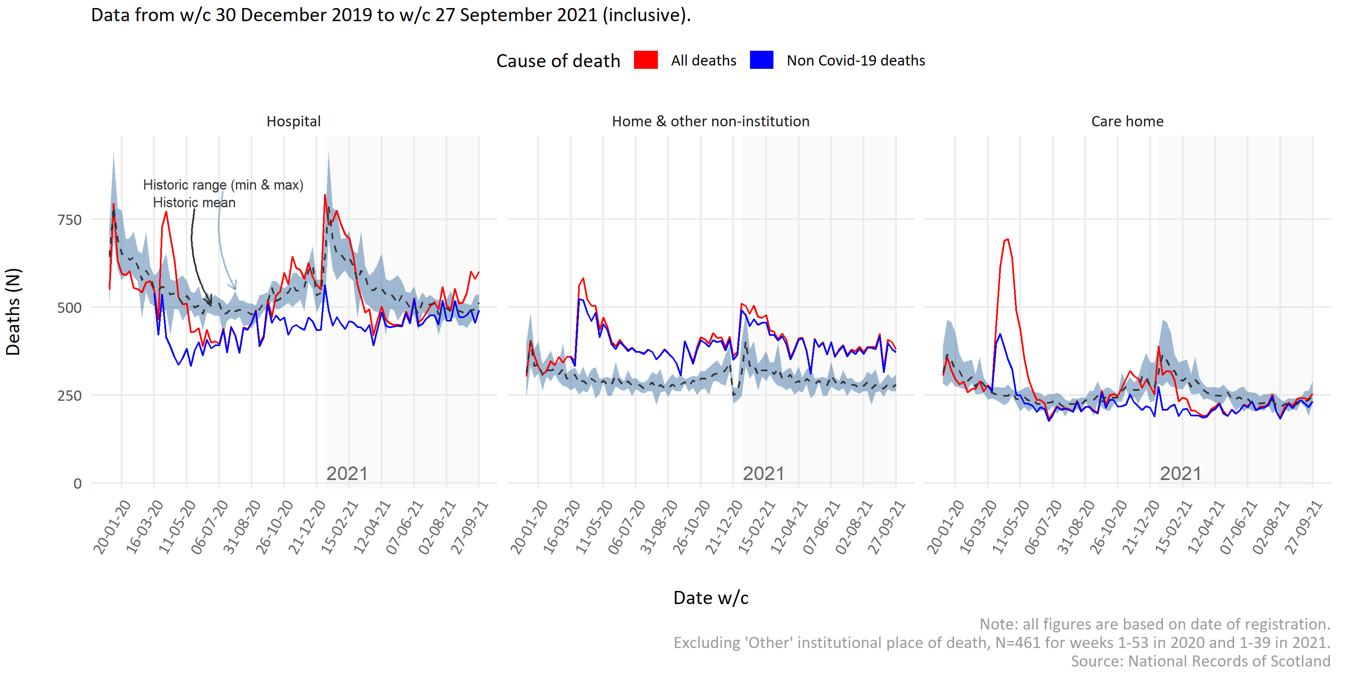
Now more than one in three deaths occur at home.
Even as numbers of deaths in hospitals and care homes return to pre-pandemic levels, home deaths continue to run above normal levels, with no sign of moderating.
Only around 2% of at-home deaths are thought to be related to covid; the increase has been largely driven by cancer, cardiovascular disease and other long-term conditions.
The analysis was compiled by Jan Savinc of the Scottish Centre for Administrative Data Research (SCADR), who says his findings raise questions about whether these are “good deaths”.
But a lack of comprehensive data on end of life makes research in this area challenging.
Speaking at a stakeholder meeting, Jan Savinc said: “Our next step is a linked data study to explore factors that explain this shift, as well as the effects on the quality of care received and palliative care provision.
“However, with no nationwide social care data, proxy measures – such as local medicine shortages, cancers diagnosed late, quantity of services used by people and emergency admissions – must be used to measure quality of care, which are not perfect alternatives.”
The Scottish government acknowledges the value of the first 1000 days of life to a person’s future health and wellbeing, and has pursued policy and data collection with this in mind since at least 2016.
But Kenny Steele from Highland Hospice says this is in stark contrast to the final 1000 days.
He told attendees: “We don’t actually know what’s happening with our population at end of life.
“Birth and death are the two most important parts of life, or at least where we spend most of our money.
“Up to 29% of NHS money goes to end-of life care – that’s around £200m a yea in NHS Highland and we have no idea if we are spending it wisely.”
In New Zealand over-65s and people with long-term conditions are assessed with routinely collected data and an algorithm indicates whether the person is in their final 1000 days of life.
This highly reliable indication, says Dr Iain Atherton, co-director of SCADR, allows informed conversations to take place between clinicians and people close to the end of life.
This means the focus can ‘switch from acute care to giving value to those last days’, he said in a blog post.
Richard Meade from Marie Curie - which has called for a covid inquiry to explore deaths at home over fears of unmet care need during the pandemic - says reframing discussions around end-of-life care can also benefit the health service.
The Head of Policy in Scotland told healthandcare.scot:
“We often talk about palliative care and support for people terminally ill and dying and making sure they get access to palliative care, which is obviously hugely important.
“But what we don’t talk about is what happens if they don’t get access to palliative care or if they don’t get the support they need when they’re terminally ill - this often has a knock on effect in the system.
“So somebody, for example, who doesn’t have palliative care is far more likely to use A&E services, far more likely to use out of hours services, far more likely to be admitted to hospital when it potentially isn’t necessary; they could’ve been supported at home.
“When we think about some of the pressures that are currently happening in the health and social care system – obviously ambulances, accident and emergency, delayed discharges, all of those things – a lot of the people involved in that will be people approaching the end of life.
“So actually, if we had better investment in community-based palliative care services and support for social care and primary care to look after people who are terminally ill in the community, whether at home or in a care home, there’s a really good chance we can relieve some of that pressure on the acute system.”
Read more: Worries over end-of-life care as home deaths surge; Adults with incapacity face longest discharge delays; Sector reforms "must put social back in social care".
Sign up to our bulletin for key health & social care updates straight to your inbox.
|