|
Insight: How music can help dementia patients |
Related newsIJB costs driving councils’ unsustainable funding gap Celebrating volunteers’ part in ‘NHS family’ Scotland urged to plan ahead as sight loss increases Call for return of Holyrood Older People’s minister Argyll & Bute appeals to ministers over care funding Guardianship orders hit record high NHS Fife embracing music therapy NHS Fife awarded university status Shocking levels of violence towards NHS staff Scotland-first virtual reality for chronic pain New initiative helps parents hop through labour steps Snapshot of NHS recovery revealed 
|
|
|
||
|
||
|
Playlist for Life is a UK charity that works with care homes, the health service and education institutions to promote the use of music as a first line of treatment in dementia patients.
It uses tailored playlists with familiar songs from childhood and life events like wedding days as an alternative to medication that can reduce distress and aid memory, with one Glasgow care home reporting a 60% fall in the use of anxiety medication.
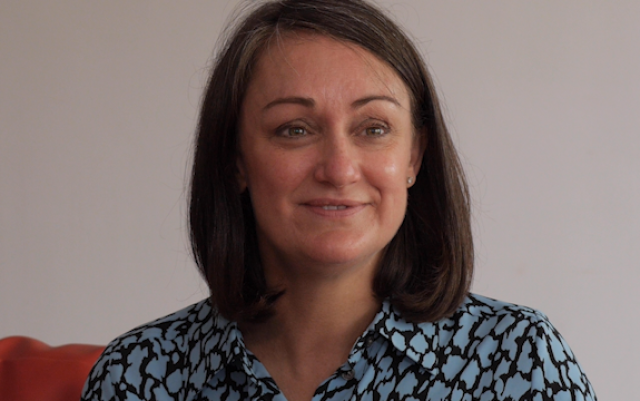
To mark World Alzheimer's Day, Helen Skinner, Alzheimer Scotland Dementia Nurse Consultant at NHS Fife, shares her success using music instead of medication to reduce distress for patients living with dementia in hospital.
Often patients who come to hospital with dementia are frequently distressed and agitated, we try to support them as best as we can without using medication where possible, as naturally sedating with medicine poses other risks and side effects which must be considered.
I first came across Playlist for Life when reading the founder Sally Magnusson’s book, ‘Where memories go’ in 2014. We strive to deliver care which is personal to each patient, based on their likes and preferences, and music felt like the best way to support that objective. I was fascinated and desperately wanted to get involved to establish how we could implement music to support our patients in a hospital environment.
After raising the matter with management and gaining their support, I approached one of the hospital charities, Friends of Queen Margaret Hospital, and applied for funding to implement Playlist for Life in the wards.
The process for curating playlists is simple to learn and put into practice. Identifying soundtracks with a patient can be daunting, with some healthcare staff members understandably apprehensive at first, but as soon as they see their efforts come to life in a patient, the reaction is incredible.
We now have twelve wards fully trained across NHS Fife, and the response has been phenomenal from patients, relatives, and staff.
From improved moods and increased communication, through to implementing ‘therapeutic scheduling’, whereby providing the patient with music prior to a stressful activity such as taking blood or showering, we find the music helps to relax and calm patients with little or no need for medication to be involved at all.
In particular, on mental health and community hospital wards where patients are usually in for longer durations, it’s an excellent tool to increase communication and encourage discussion between patients and staff.
We’ve also had great success implementing music in acute settings and A&E, where patients are more transient. In these environments we quickly identify a patient’s preference to music and provide them with a ‘preferential playlist’ which is ready to be used on the ward straight away, opposed to a completely personalised playlist. In this environment, the preferential playlist dramatically relaxes patients, particularly after a sudden illness or accident where they can be treated quickly and discharged.
We encourage and work towards ‘person-centred care’, seeing the individual and not the diagnosis of dementia, but it’s not always as easy as it sounds. Through Playlist for Life, staff feel they get to know their patients on a deeper level, opening new streams of conversation and singing and dancing along to soundtracks with them, allowing them to get to know and understand the person rather than their diagnosis.
We’ve also had wonderful feedback from relatives, who are often desperate to support their loved ones by any means possible. Utilising music gives them the opportunity to reconnect, as they help their friend or family member collate their playlist whilst providing them with an engaging task to enjoy together while they’re visiting.
We’ve had patients who have little speech or maybe no speech, who suddenly start singing or humming along to their favourite track, which is an incredibly special moment not just to the patient’s family, but the staff too. To continue the use of Playlist, once a patient is discharged, we gift their personal MP3 player to them, so they can continue to benefit from their music at home or their next place of care.
The power of music is so significant, we must work together to unleash its potential by using it as a therapeutic intervention to support people with dementia, enhancing the care we provide.
For more information on the training courses or to hear more about Playlist for Life, please visit: www.playlistforlife.org.uk.
Additional details can also be found on our dedicated training site: training.playlistforlife.org.uk Tags: Older People. |
