|
Insight: Learning disability “pandemic of loneliness” |
Related newsProviders: children’s service cuts ‘devastating’ Review: More social care staff should be regulated Scotland prioritises neuro-inclusion, says government Ways to build on healthcare’s digital foundations Accelerating digital innovation in social care 
|
|
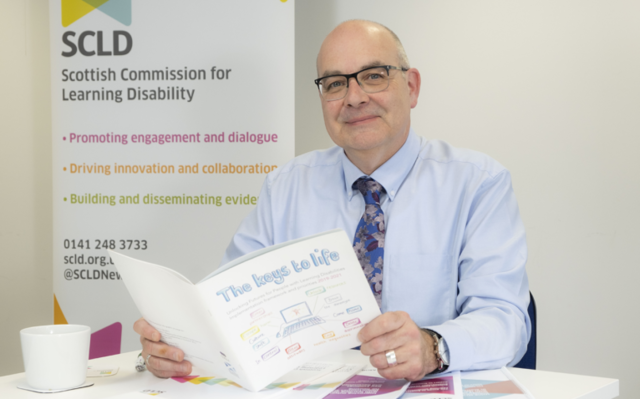
Image: SCLD
Charlie McMillan of the Scottish Commission for Learning Disability
|
||
|
||
|
People with learning disabilities were “left at the margins” during Scotland’s response to the covid-19 pandemic, the head of an independent commission has said.
Charlie McMillan of the Scottish Commission for Learning Disability (SCLD) said there had been a “pandemic of loneliness” because care packages had been removed, families had not been able to visit and some were shielding.
SCLD analysis of one of the biggest surveys of people with learning disabilities in Scotland for a decade found that, although satisfaction was generally high, a number of “concerning” factors were linked to lower wellbeing.
Many of these, such as levels of social connectedness and a lack of support with health issues, are thought to have worsened since the survey was carried out in 2019.
MSPs complained last year of the “apparent invisibility” of people with learning disabilities in public health data, highlighting the challenges in assessing the impact of covid-19 on this group.
In England, the health service collates monthly figures on deaths among people with learning disabilities, but this is not done in the same way north of the border.
Speaking to healthandcare.scot, Charlie McMillan echoed concerns about gaps in routine data collection by the health service in this area.
“We’ve really done people a significant disservice by not having meaningful data collection,” he said.
“One of the gaps here is about GP data collection. Data collection in primary care absolutely needs to be more specific.
“That did have impacts across the board [during the pandemic] because it’s inconsistently collected and therefore that means in some areas you have a different response to other areas.”
Last month marked ten years since the Winterbourne scandal in England, which shone a light on the placement of people with learning disabilities in hospitals and prompted heightened concerns about institutional care.
A 2018 report suggested there could be more than 400 Scots with severe mental health problems and learning disabilities who had been placed in institutions away from their families, often due to a lack of specialist services locally.
A Scottish government group set up to address the issues is set to report soon.
“It’s a much smaller group in Scotland, but there are a group of people who are ‘living’ in hospital, and that has to be addressed as a priority,” Charlie McMillan said.
He cited a quote from former New Zealand Prime Minister Norman Kirk: what people want is “someone to love, somewhere to live, somewhere to work and something to hope for”.
That, says Charlie, is “absolutely impossible to achieve” if someone is kept in hospital away from family and friends.
Read more: Scots with learning disabilities "invisible" in virus; Covid learning disability deaths three times higher; Fears over ‘smokescreen’ day service cuts
Sign up to our bulletin for key health & social care updates straight to your inbox. Tags: Data; Learning Disabilities. |
