|
New funding must focus on ‘traumatised’ staff |
Related newsChief Medical Officer: ‘Critical connections’ priority Mandatory jabs for staff ruled out in Scotland Staff isolation changes to be used “in extremis” Care home fears over rising community infections NHS left with less than 24hr PPE supply Social work “blindspot” in National Care Service plans 
|
|
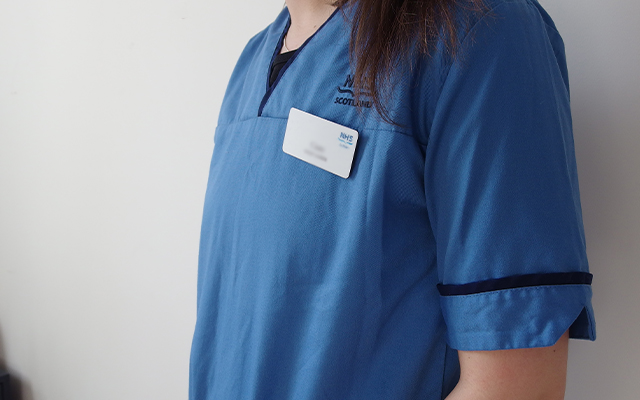
© Sarah Nimmo
|
||
|
||
|
Nursing leaders are reacting to the Scottish budget by calling for NHS funding to be used to help “traumatised” staff – while doctors’ representatives are warning it is NHS workers who bear the brunt of “unrealistic expectations sold to the public” about what the health service is capable of in the wake of the virus.
Both the Royal College of Nursing and the British Medical Association have raised serious concerns about the impact of working through covid-19 on nurses’ and doctors’ physical and mental health.
Responding to the Scottish budget announced yesterday – which raised health spending to £16bn – the nurses’ trade union is urging government ministers to ensure plans for NHS recovery “focus on supporting an exhausted health and care workforce”, as well as offer a “meaningful pay rise” for nursing staff.
The Royal College of Nursing (RCN) said it is “extremely concerned” about the physical and mental health impact of working throughout the pandemic is having on health and care staff.
Specialist mental health support is required to help staff recover and stay on in the profession “at a time when the nation needs them more than ever”, the College said.
An RCN survey last summer, in the wake of the first wave, showed a worrying rise in those reporting that they are considering quitting the profession, with 38% of respondents in Scotland thinking of leaving nursing, compared to 27% in 2019.
Norman Provan, RCN Associate Director said: “The focus must be on supporting an exhausted and traumatised workforce. Health and care staff must be given the support they need – now and beyond the crisis.
“Funding for health boards must address the significant treatment backlogs as well as the need to deliver care to individuals with long term clinical and rehabilitation needs as a result of the virus.
“Sustainable solutions to workforce shortages are needed and funding for health and social care provision must be sufficient to ensure that care can be provided safely, with the right staff in the right place at the right time.
“Nursing staff are worse off now than ten years ago in real terms and with thousands of nursing jobs vacant, the government cannot afford to let more leave over low pay.
“A meaningful rise will bring in new nursing staff and keep experienced ones in post. This is why the RCN is continuing to campaign for a fully funded pay increase of 12.5%.”
Meanwhile, the body representing many of Scotland’s doctors says an “honest conversation” needs to be had about what the NHS is capable of when staff have been exhausted by the pandemic.
The British Medical Association’s Dr Lewis Morrison has welcomed the increase in funding announced yesterday, but says short-term financial boosts will not be enough to deliver “the full recovery our NHS needs, or place [it] on a secure and sustainable footing well into the future.”
The BMA Scotland Chair says staff have been “stretched like never before” and that now is the time to be “honest” about what the NHS and staff close to burnout can do.
“We know that before the pandemic our health service was understaffed, under-resourced and under unrelenting pressure.
“The fact that the NHS has managed to cope with the pandemic and go above and beyond is testament to the unrelenting commitment of the workforce.
“But we need to be honest about what the NHS can continue to deliver with the available resources.
“When we talk about NHS recovery, this must mean the recovery of the staff who have been through the toughest of times over the last year. The staff are the NHS’s most precious resource, and it is them we will be asking to lead the remobilisation of services – they can’t and won’t be able to do that effectively unless we invest properly to support them in their own recovery.”
Dr Morrison added: “As we look to the future, we must take account of the new pressures that will exist on NHS services, as well as the crucial need for recovery and respite for health and care staff, many of whom are close to burnout.
“…Increases in funding must lead to investment in our staff, in their health and wellbeing, in making sure they have access to the support services they need for their own wellbeing and ensure they remain part of the workforce, in making sure that the NHS is appropriately and safely staffed and also ensuring that Scotland is an attractive place to live and work as a doctor.
“It is the staff who bear the brunt of the unrealistic expectations sold to the public about what can be achieved. It is only when we start being honest about what level of care is possible can we start to do that and create a stable future for the NHS in Scotland.”
Sign up to our bulletin for key health & social care updates straight to your inbox. |
