|
Insight: Taking hospital to people’s homes |
Related newsFrailty services supported with £85m Turning policies into social care practice Music, dance, rugby and dementia Call to pause NCS development until after winter NCS Lived Experience Panel Launched 
|
|
|
||
|
||
|
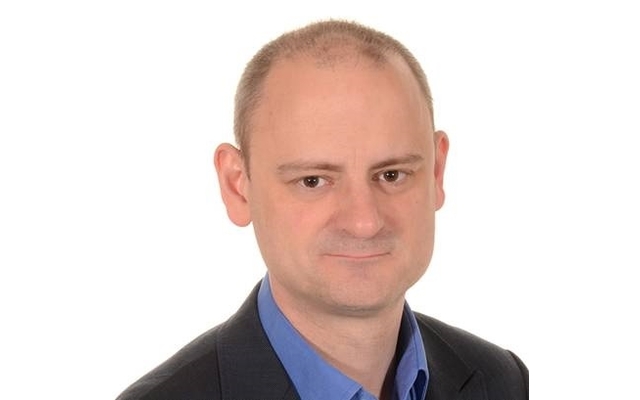
Dr Graham Ellis, a consultant working in Lanarkshire, still remembers when the “penny dropped” about the value of a pioneering new approach to treating older patients.
An older man, Hugh, had a chest infection, heart failure and an irregular pulse which meant he could hardly walk, let alone go downstairs or leave his house.
“There was no question that he would ordinarily have gone into hospital. And he was so sick he would have needed it,” Dr Ellis says.
But instead, Hugh received the kind of care normally provided in a hospital in the comfort of his house, under an initiative called Hospital at Home.
“We treated the medical things,” Dr Ellis said, “But we also talked to him and his wife about what their preferences and they were very keen for him to stay at home if he could.”
Hugh received daily visits from nurses and therapists who came in to help him recover his strength.
“He was an example for me of when the system worked really well. If he had gone into hospital we would have had to get the medical things sorted first,” says Dr Ellis, who is also a Scottish government clinical advisor.
“He could not have gone home because he was unable to walk the length of the room himself. He would have stayed in a hospital bed for several days and then we would have had to look at rehabilitation or testing to see if he was well enough to return to his home environment - the whole process becomes complex.”
In 2011 Dr Ellis and his colleagues helped launch a Hospital at Home service in NHS Lanarkshire, the first of its kind in Scotland.
The service has seen nearly 20,000 patients since it first opened and received a number of national awards.
Now a passionate advocate of the scheme, Dr Ellis wants to see it extended across Scotland and the rest of the UK.
He is one of the co-founders of the UK Hospital at Home society which launched this year and held its first conference last month.
Hospital at Home is defined as acute hospital level care delivered to patients at home who would otherwise need a hospital bed.
Patients are treated as though they have been admitted to hospital, meaning they get a much higher level of care than usual community healthcare.
Still a relatively new concept, in Scotland it has received the backing of Health Secretary Jeane Freeman
Services are usually aimed at frail older people who are most at-risk of deteriorating while in hospital, with studies suggesting half do not return to their pre-admission level of functionality.
Covid-19 has brought the benefits of the project into sharper focus.
Dr Ellis told healthandcare.scot: “[Older people] were afraid to go into hospital… the risk of the pandemic in hospital is greater and the consequences of catching it are more severe if you are older, shielding, frail or have lots of health problems.”
“We found a lot of older people who were quite unwell were refusing to go into hospital so GPs were finding it easier to say ‘we will bring the hospital to you’.”
Although he admits it can be surprising to see the hospital doctor turn up in your living room, Dr Ellis says the feedback from patients – and their families – is overwhelmingly positive.
“I think people recognise hospital is a mixed bag, we do need them and they’re great when you do need them but they are not always easy, the uncertainties, the anxieties and the travel can be quite a burden with hospital. And they recognise the fact that you can pick things up in hospital, that you can have infections from there.”
Relatives also said they value being involved in discussions about their loved ones’ care, in contrast to hospitals where they may be left in the waiting room or feel excluded from the conversation
“If I’m going to see someone in a house I will usually see them in a few hours of them having been referred from the GP,” Dr Ellis says, “and I’m likely to have a conversation with say, a husband and wife together, not just the patient.”
At first glance the initiative – sending health professionals away from hospitals into one person’s home at a time – sounds like it could be more expensive than usual models of care.
“It’s actually cheaper,” responds Dr Ellis, “the average cost of a Hospital at Home bed in Lanarkshire is nearly half what it cost to be in a hospital bed and even after six months there is still a 20% saving on that.”
It seems counterintuitive, he says, but patients are actually receiving bespoke treatment without all the additional costs – heating, staffing, equipment – that a physical hospital entails.
In Lanarkshire success of the project led to some beds being closed, with fewer people coming into hospital.
Dr Ellis acknowledges this may not be possible in future because the number of people who need hospital treatment continues to increase, before admitting there will always be a “difficult political tussle” about closing beds and moving funding into the community.
But he adds: “The other thing is that I don’t think we are as big – in terms of scale – as we could be.
“Lanarkshire is currently the biggest Hospital at Home service in Scotland, but we could easily be double or triple the size…It’s just a question of trying to gradually shift the balance out-of-hospital.
“It’s a difficult shift when you are currently overstretched, so there’s no denying that conversation is a difficult one. But it’s theoretically something that can be done.”
Supporters – If you can help support our reporting for Scotland's health and social care community, please head to our donations page.
Bulletin – Sign up for all the latest news and events.
Tags: Hospital to Home; Older People. |
