|
How future homes can fix ‘shameful’ disability gap |
Related newsSupporting disabled people into elected office Social workers call for disability funding rethink Infection risk petition set to fail Praise for charity CEO who turned down MBE Disabled working women ‘excluded by design’ 
|
|
|
||
|
||
|
Doors that slide open at the touch of a button, kitchen cupboards which can be raised and lowered and blinds controlled by an app would be a welcome addition to any house.
But for people with disabilities, these innovations can make a crucial difference in their ability to live independently.
One housing and care provider has embarked on a plan to bring in a new standard for accessible housing to help plug a “shameful” gap in provision of suitable accommodation for disabled people in Scotland.
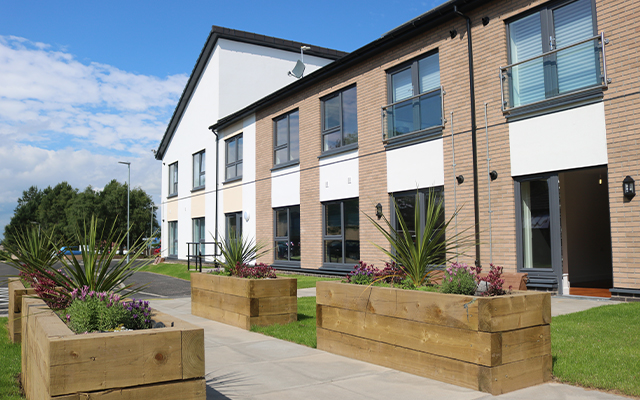
Charity Blackwood Homes and Care has already built developments in Dundee and Glasgow and has a programme for 160 homes over the next four years.
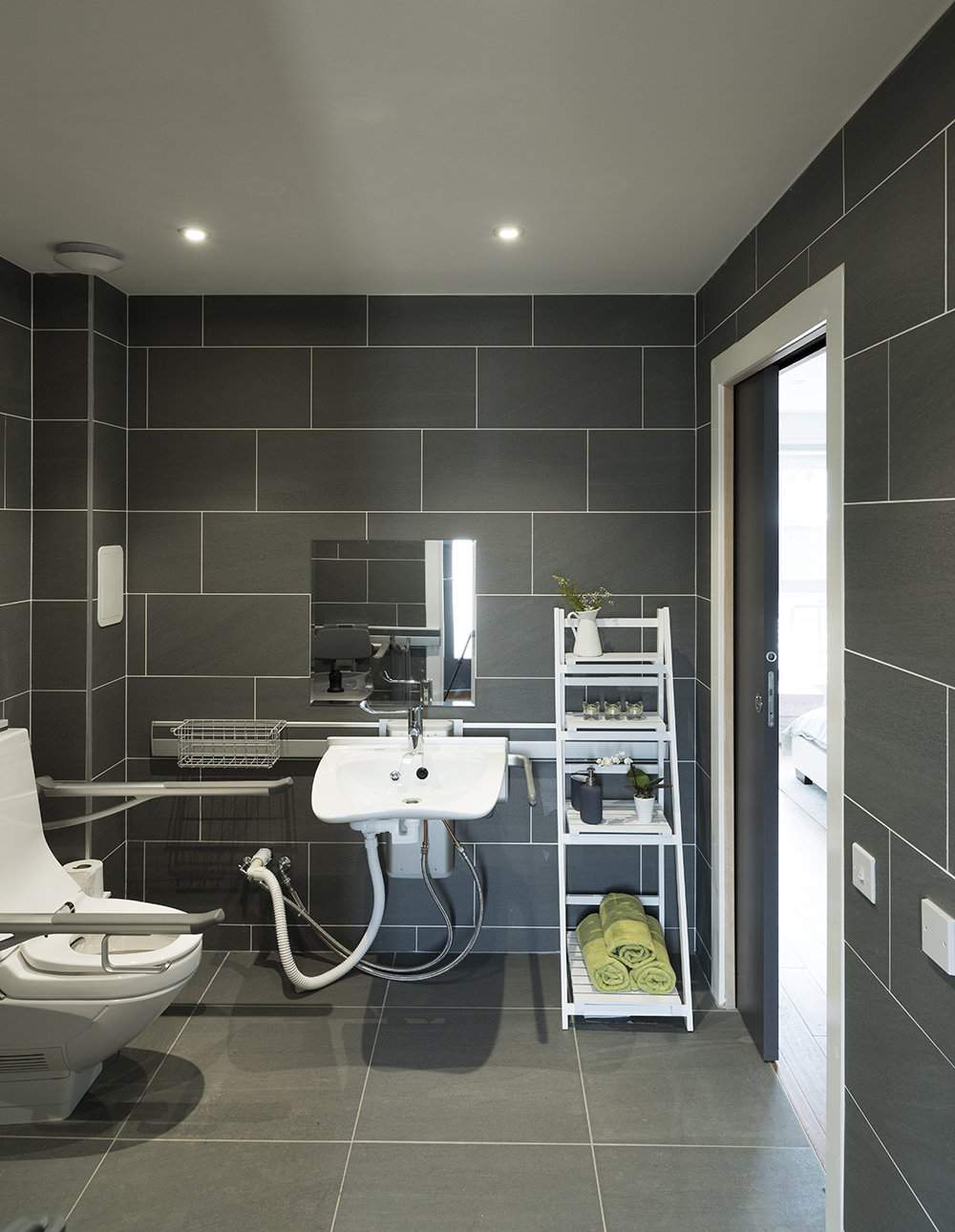
Using a combination of design and technology, the homes include features such as more ‘wheelchair-friendly’ open-plan living spaces and kitchens which look chic while incorporating surfaces that can be raised and lowered.
Simon Fitzpatrick, development and commercial director at Blackwood Homes and Care, said: “The difference it makes can be something as straightforward as someone now being able to make their own cup of tea.
“The level of independence – and frankly dignity – that can bring someone is massive.
“We would like to think care provision could then be used to do things that might be more meaningful than making someone a cup of tea.
“That could mean taking someone to the football, the rugby, the opera – as opposed to simply doing a task that now someone can do themselves.”
The Equalities and Human Rights Commission (EHRC) has previously highlighted a “hidden crisis” of housing for disabled people across the UK.
A report published in 2018 found almost 10,000 disabled Scots were on housing waiting lists, but only 0.7% of local authority housing and 1.5% of housing managed by social landlords were accessible for wheelchair users.
Mr Fitzpatrick said a development of 66 Blackwood homes which is planned for Dundee would almost halve the waiting list in the city for houses with level access and sufficient space for wheelchair users.
He added: “[The EHRC] highlighted an absolute, almost a shameful gap, between provision and the demand.
“Blackwood Housing aims to address that, or at least address that gap in some areas.”
One of the many features of the homes is a lack of a typical corridor design and an open plan kitchen and living room meaning any room in the house can be accessed with just one door.
Automated sliding doors which can be controlled via a tablet help with manoeuvring a wheelchair and underfloor heating removes the need for radiators, giving additional space in the room.
The homes make extensive use of technology, include a video entry door system, and automated blinds that can be adjusted through the tablet.
“The importance of that is that if all you can do in terms of choice and control is choose when you see sunlight, that is still a huge thing to someone,” Mr Fitzpatrick said.
“We hope the house has layers of that level of control.”
The technology used to automate the home is based on a platform Blackwood has developed, known as CleverClogs.
This also allows residents and their families to keep track of care appointments and care plans and can even be used for remote monitoring and health checks, such as blood pressure.
The cost of building a Blackwood home is around £30,000 more than a typical two-bedroom house.
Mr Fitzpatrick said affordability was also one of the key criteria in the design, with rents at the upper end of the scale in the sector.
He pointed out looking at only at monetary value did not take into account the difference being able to live in an accessible home can make to someone’s life.
“There is a lovely story of one of our tenants in Dundee, who was a wheelchair user and had lived in respite care for two years,” he said.
“He had to be in his room, for lots of understandable reasons, by 10pm. Now he enjoys entertaining and has a partner.”
The next Blackwood development of 24 homes in the east end of Glasgow is nearing completion and the charity hopes to expand its programme further in the next few years.
“If we can get up to the scale, we would like to see a blended approach between referrals from health and social care partnerships, helping the local housing area waiting lists and people on our own waiting list,” Mr Fitzpatrick said.
“We would also like to look at moving into the private sector – for example we would explore using the Blackwood House for sale, for retirement living options and build to rent as well.”
Sign up to our bulletin sent twice a week so you don’t miss out on the latest health and social care news, jobs and events. Tags: Disability. |